How to Arrange Cutlery: A Table Setting Guide
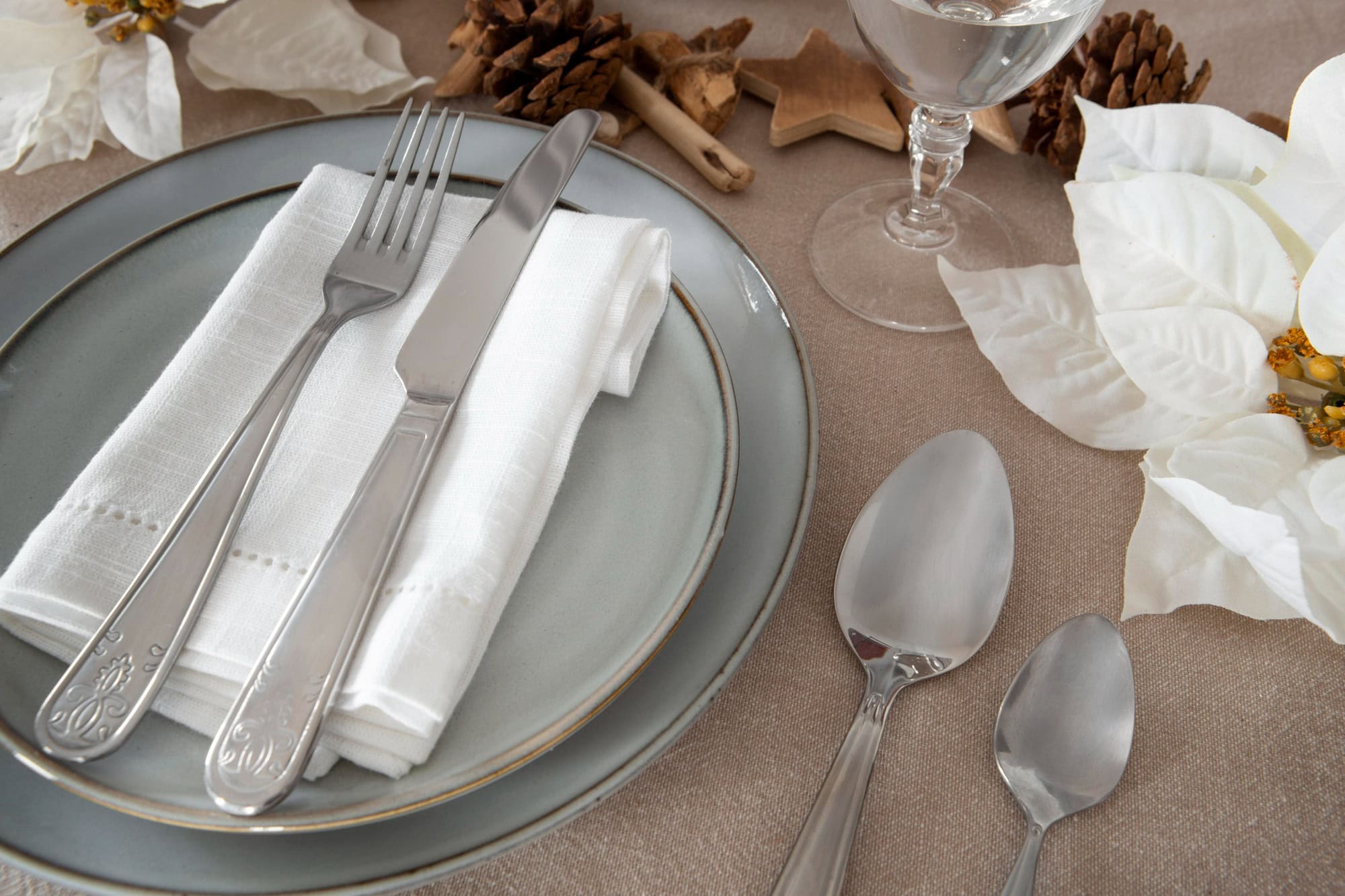
To arrange cutlery on a table, place forks on the left of the plate and knives and spoons on the right. Set each item in the order it will be used, working from the outside in towards the plate. This simple cutlery order works for both casual meals and more formal dining occasions.
A well considered table setting brings clarity to the meal and helps guests feel comfortable from the moment they sit down. The number of pieces you need will depend on the menu, so it is best to set only the cutlery required for each course.
The basic rules of cutlery placement
The plate sits at the centre of each place setting, with forks placed to the left and knives and spoons to the right. Where several courses are served, arrange the cutlery in the order it will be used, beginning with the first course furthest from the plate.
The essential cutlery
Knife: Place the dinner knife to the right of the plate with its blade facing inwards.
Fork: Set the dinner fork to the left of the plate, ready for the main course.
Spoon: Position a spoon to the right when it is needed for soup or another opening course.
Additional cutlery for specific courses
Some dishes call for an additional piece of cutlery. A dessert spoon or fork can be placed above the plate, while a fish knife or butter knife may be added when the menu and style of service require them.
Dessert fork: A smaller fork used for dessert, usually placed above the dinner plate.
Fish knife: A shaped knife that helps guests separate delicate fish neatly.
Butter knife: A small knife placed on the side plate for butter or soft spreads.
How to set cutlery on a casual table
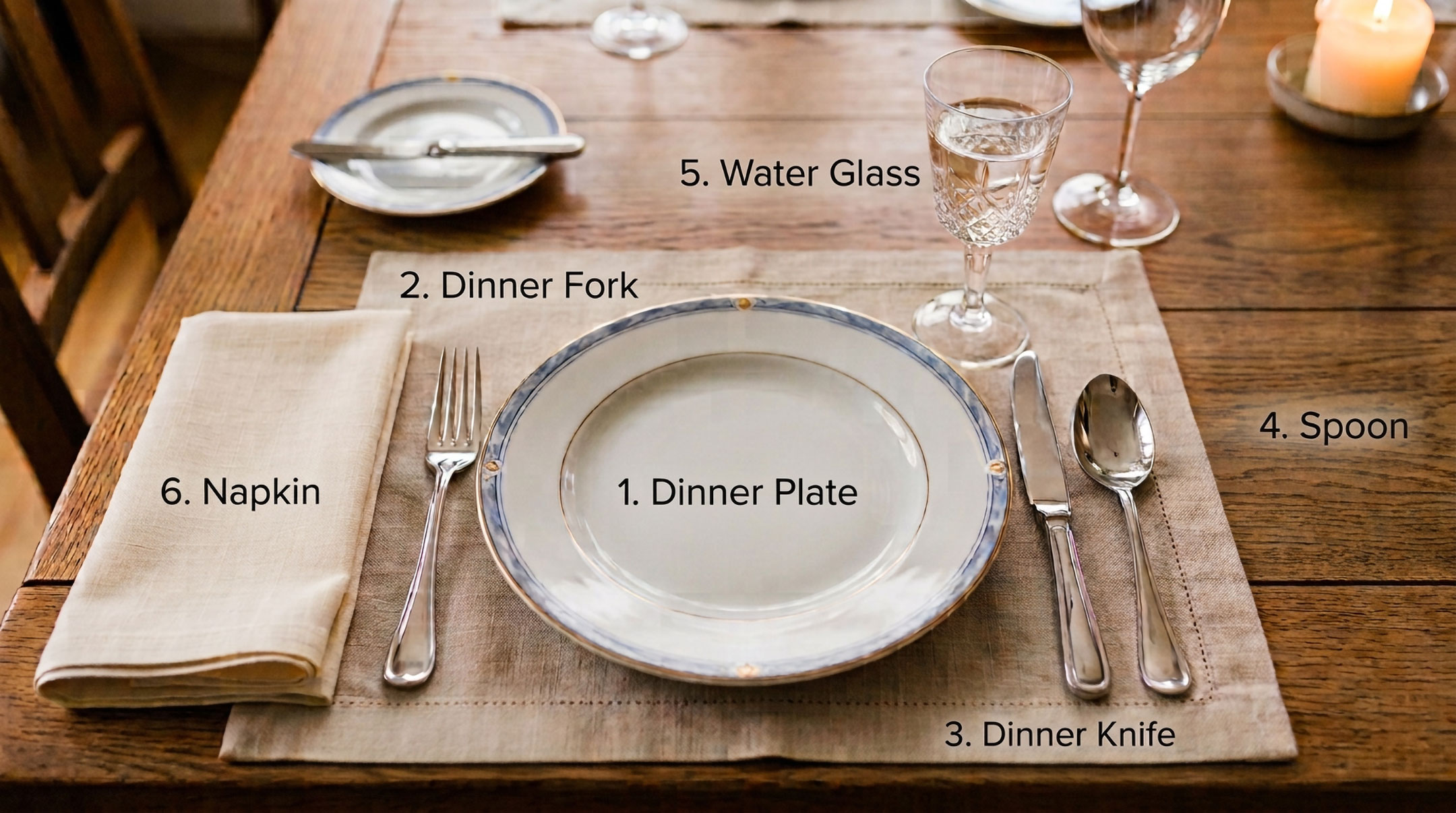
A casual setting should feel relaxed while still being organised. For a simple lunch or dinner, one fork, one knife and one spoon may be all that is needed.
- Position the dinner plate in the centre of the setting.
- Place the dinner fork to the left of the plate.
- Place the dinner knife to the right, with the blade facing inwards towards the plate.
- Set a spoon to the right of the knife when soup or another course requires it.
- Position the water glass above the knife, slightly to the right.
- Add a napkin to the left of the fork or place it neatly on the plate.
Keep the setting proportionate to the occasion. A simple table is often more inviting than one with unnecessary pieces of cutlery.
How to arrange cutlery for a formal dinner
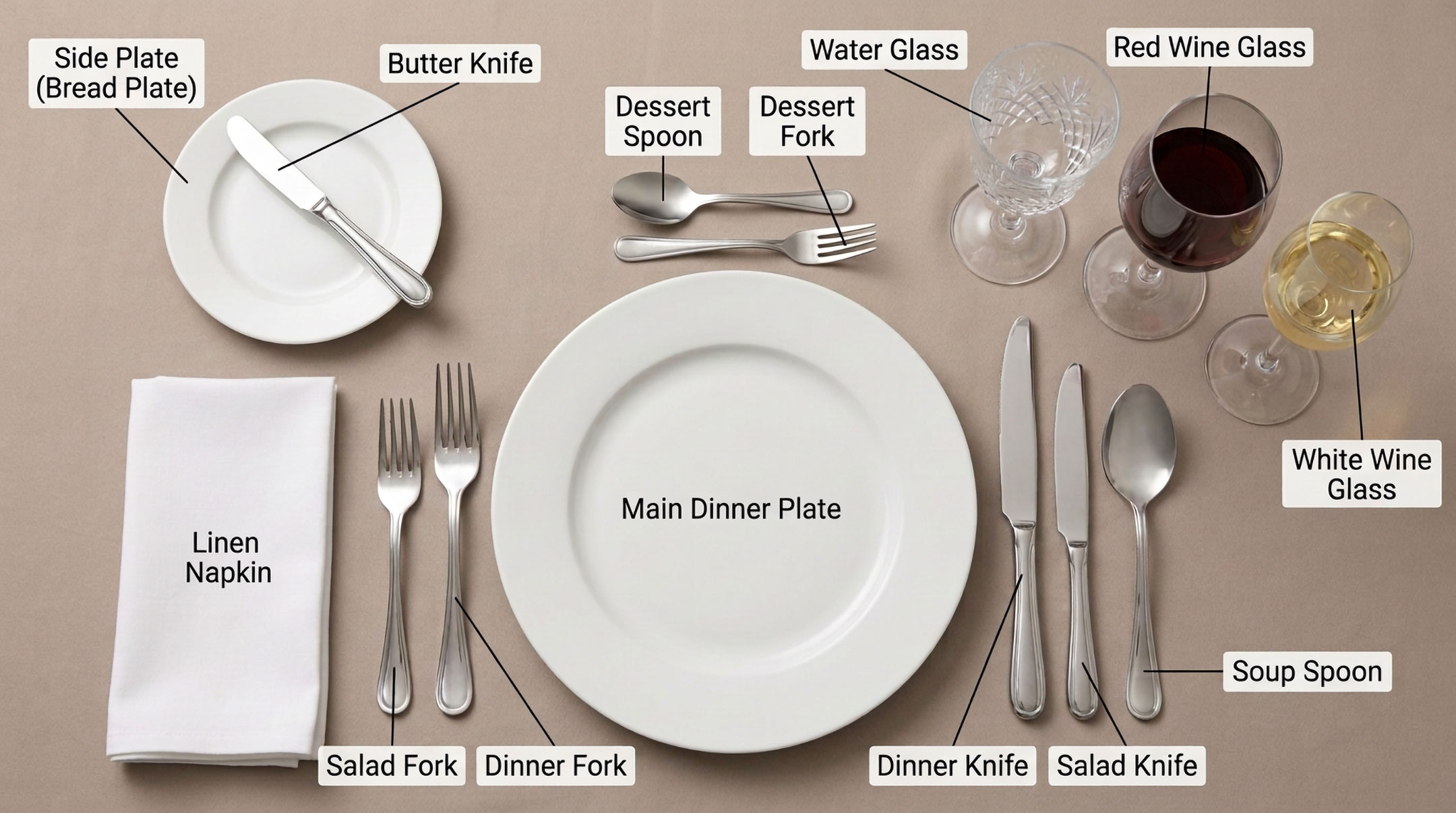
A formal table setting follows the same principles, with additional pieces added only when the menu requires them. The arrangement should remain balanced, leaving enough space for each guest to dine comfortably.
- Begin with the dinner plate at the centre of the place setting.
- Add the dinner fork to the left of the plate and the dinner knife to the right.
- Place starter cutlery outside the cutlery for the main course, so it is used first.
- Set a soup spoon outside the knives if soup is served before the main course.
- Place dessert cutlery above the plate when needed.
- Position the side plate to the upper left and place the small knife on the plate where required.
- Arrange glasses above and to the right of the dinner plate, with each glass selected to suit the drinks being served.
A more detailed place setting can still feel calm and refined when every item has a purpose. Avoid overcrowding the table, particularly where the meal is designed around fewer courses.
Bringing the Place Setting Together
Use this guide as a reference when preparing each place setting.
| Position | Cutlery or item |
|---|---|
| Upper left | Side plate with a small knife where required |
| Left of plate | Forks, arranged from outside in |
| Centre | Dinner plate |
| Right of plate | Knives and spoons, arranged from outside in |
| Above plate | Dessert cutlery where required |
| Upper right | Water glass and additional glasses |
Choosing the right cutlery for the menu
The cutlery you set should reflect the meal you are serving. A simple dinner may need only a knife and fork, while a more formal menu can call for additional pieces as each course changes.
Consider how the meal will unfold from the first course through to dessert. A soup course calls for a spoon, while fish may be more comfortably enjoyed with a dedicated fish knife and dessert often benefits from its own smaller utensil. These additions should feel natural to the menu rather than overly formal, giving guests what they need as each course is served while keeping the table balanced and welcoming.
For inspiration on dishes that shape a refined dining experience, explore Harper Privé menus.
Creating a table that feels considered
Once the cutlery is in place, take a moment to look at the table as a whole. Each setting should feel clear and balanced, with enough space for guests to move comfortably through the meal without reaching around unnecessary pieces.
Let the menu guide the final arrangement. A simple dinner may need little more than the essentials, while several courses call for a more structured cutlery order. Where space is limited, dessert cutlery can be placed above the plate or brought out with the final course to keep the table feeling composed.
For guidance on napkins, glassware and wider table styling, read how to lay a table elegantly.
Let our chefs handle the dining experience
Hosting a dinner should leave you free to spend time with your guests. Harper Privé creates bespoke private dining experiences with thoughtfully designed menus, seasonal ingredients and professional presentation in your home or chosen venue.
From the menu through to the presentation of each course, the experience can be planned around your occasion.
Explore Harper Privé private chef services in London or speak to Harper Privé about your dining plans.
Frequently asked questions
- Which side do forks go on?
Forks are placed on the left side of the dinner plate. Where more than one fork is required, arrange them from the outside in according to the order of service.
- What order is cutlery used in?
Guests use cutlery from the outside in. The utensils for the first course sit furthest from the plate, followed by the cutlery for later courses.
- Where does the dessert spoon go?
Dessert cutlery is usually placed above the dinner plate. Position the spoon so it is easy to reach after the main course without disturbing the wider setting.